

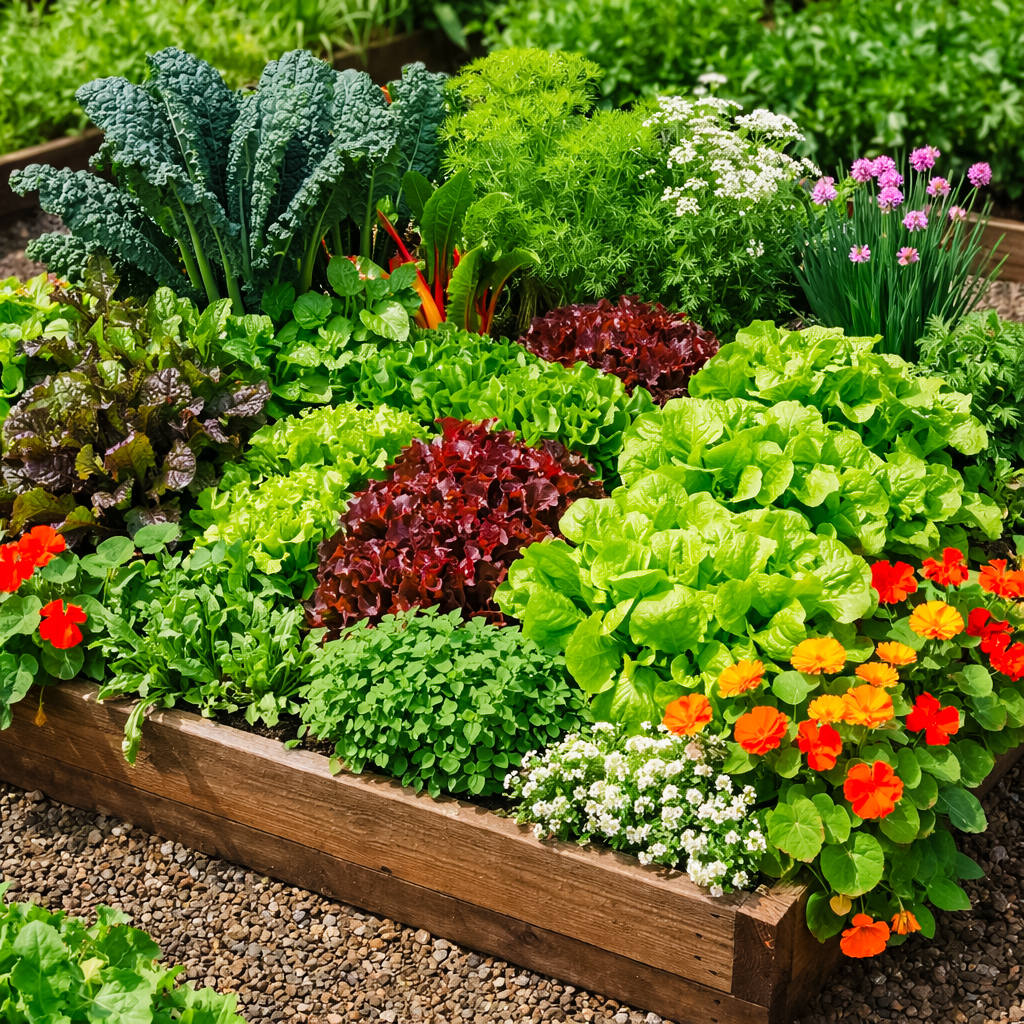
This afternoon, with soil warming under a gentle Tennessee sun, I will plant one of my four 10’ x 5’ raised kitchen garden beds—one small space designed to feed, delight, and restore. It is early spring, that quiet threshold where the garden does not yet shout with abundance, but whispers with promise. And in that promise, everything begins.
A Garden Rooted in Rhythm
Spring planting is not just a task—it is an alignment.
The soil has rested. The light has shifted. The air has softened. And now, the garden invites us back.
In a well-designed kitchen garden, we don’t impose structure on the land—we respond to it. The east receives the gentle morning light, perfect for tender greens. The west carries the heat of the afternoon, where stronger plants stand like quiet guardians. The south opens itself fully to the sun, while the north holds a cooler stillness.
To plant with awareness of these rhythms is to step into an older wisdom—one that understands that timing, placement, and harmony matter just as much as what we plant.
The Beauty of Intensive Planting
This bed will be planted using an intensive method—sometimes called square-foot or biointensive gardening. It is a way of growing that replaces rows with relationships.
Instead of long, empty pathways between plants, every inch of soil is honored. Lettuce is tucked closely beside lettuce. Arugula fills the front edge. Kale and chard rise in the back, not just for harvest, but for protection.
The result is a living quilt:
•Soil shaded and protected
•Moisture retained
•Weeds suppressed naturally
•And a surprising abundance from a small space
There is something deeply satisfying about this fullness. The garden feels alive, layered, intentional—never sparse or exposed.
A Kitchen Garden, Not Just a Garden
This is not your grandfather’s garden; it’s not an agricultural production field. It’s a kitchen garden.
That distinction matters.
A kitchen garden is planted with the hand and the table in mind. It asks:
•What will we reach for daily?
•What can be harvested fresh, just steps from the door?
•What brings both nourishment and beauty?
In this bed:
•Buttercrunch and tender lettuces will offer soft, sweet leaves
•Arugula will bring a peppery bite to early meals
•Kale and chard will sustain us longer into the season
•Dill and cilantro will flavor the table and invite beneficial insects
•Calendula and alyssum will bloom quietly among the greens
Even the placement reflects use: the front edge for daily harvesting, the center for steady gathering, the back for structure and longevity.
Planting with Purpose: Layers of Function
Nothing in this bed is accidental.
The taller greens along the western edge form a living shield, softening the harshness of the afternoon sun. The more delicate lettuces rest toward the east, protected and cool.
Flowers are woven in—not as decoration, but as partners:
•Alyssum calls in beneficial insects
•Nasturtium draws pests away from tender leaves
•Calendula brings both beauty and quiet medicinal value
Herbs anchor the space, offering fragrance, resilience, and protection.
This is the quiet brilliance of companion planting: a system where each plant supports the others, and the whole becomes stronger than its parts.
The Act of Planting
There is a moment, when the first plant goes into the soil, that everything slows.
Hands press gently around roots. Water settles the earth. The spacing is close, but not crowded—intentional, but not rigid. Rows soften into clusters. Structure gives way to flow.
Planting this way feels less like construction and more like composition, more art than science.
You are not just filling a bed. You are arranging a living space that will change daily.
What Comes Next
In the coming weeks, the rhythm will continue:
•Morning walks through the garden, coffee in hand
•A handful of greens gathered for lunch
•The first cut of arugula
•Watching the lettuces fill in, leaf by leaf
•Noticing which plants thrive, which need adjusting
This is where the garden becomes more than a plan. It becomes a relationship.
And then, almost without noticing, abundance arrives.
A Final Thought
A small 10’ x 5’ bed may not seem like much. But when planted with intention—aligned with the sun, layered with purpose, and tended with rhythm—it becomes something far greater.
It becomes a place of provision.
A place of beauty.
A place of daily return.
And in a world that often moves too quickly, it offers something rare:
A reason to slow down, step outside, and gather what has quietly grown.
⸻