


Something extraordinary happened to me the summer before I entered the sixth grade.
I didn’t recognize it as extraordinary then, and I don’t remember anyone else thinking much about it either. It was one of those quiet markers driven into the soil of a life, unnoticed at the time but obvious when viewed years later.
That summer I wrote a novel.
Calling it a novel is generous, of course. It was simply a long adventure story born entirely from the imagination of an eleven-year-old girl. During the hottest afternoons of a Southern summer, while cicadas buzzed outside and the air hung thick with humidity, I sat with notebook paper and a pencil, happily building another world.
The public swimming pool had opened for the season, and before long our annual pilgrimage to the Back-to-School store would signal that summer was ending. But until then, I wrote.
I lived with those characters. I thought about them when I wasn’t writing. I tested different endings in my mind and occasionally found myself talking aloud as though they were real people sharing the room with me.
One day someone asked a question that caught me off guard. “Why are you writing this story?”
I remember pausing only briefly before shrugging my shoulders.
“Because it’s fun.” It was.
Only much later did I understand what had happened that summer. I had discovered the joy of making something. Not because anyone assigned it. Not because it would earn recognition. Simply because creating a story delighted my soul.
Today we call that experience flow—that mysterious place where time quietly disappears and work somehow feels more like play. I knew nothing about psychology then. I only knew that I could disappear into a story for hours and emerge happier than when I began.
Looking back now, I realize that summer wasn’t really about writing. It was about discovering the thread that has quietly stitched together my entire life. The medium has changed over the years. Sometimes it has been words. Sometimes it has been a camera. Sometimes it has been a garden. Sometimes it has simply been paying close attention.
The desire underneath has never changed. I have always wanted to notice beauty, gather meaning, and share it with others.
For a long time I believed storytellers were people who invented stories. Now I think they are often people who recognize them. The world is already full of stories waiting to be seen.
A loaf of fresh bread cooling on a counter.
Weathered hands pulling carrots from rich soil.
Neighbors lingering on a porch at day’s end.
A child carrying tomatoes in the hem of her shirt.
An elderly couple walking slowly through a farmers market.
None of these moments ask to become extraordinary. They only ask to be noticed. That, I think, is the calling of Land & Lore. Not to manufacture beauty, but to recognize it. Not to create wonder, but to bear witness to it.
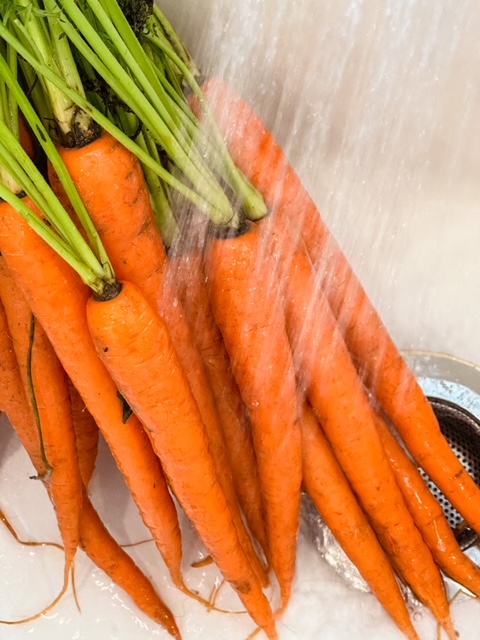
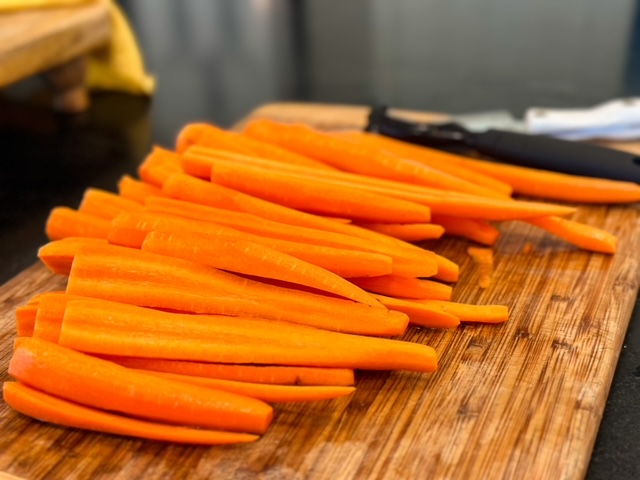
A camera has become one of the tools I use in that work, much as a pencil once was. The photographs in this essay are simply carrots. Fresh, organic carrots destined for a meal shared with friends.
But they are also about hospitality. Stewardship. Good food. Abundance. Gratitude. Home.
A photograph never tells only one story. Every viewer brings memories and experiences of their own. Someone may see garden abundance. Another may remember a grandmother who insisted carrots were good for your eyesight. Someone else may simply remember the sweetness of pulling a carrot from warm earth.
All of those stories are welcome. Because the best photographs—and perhaps the best stories—don’t tell people what to think.
They simply invite us to look more carefully at a world that has been speaking all along.