

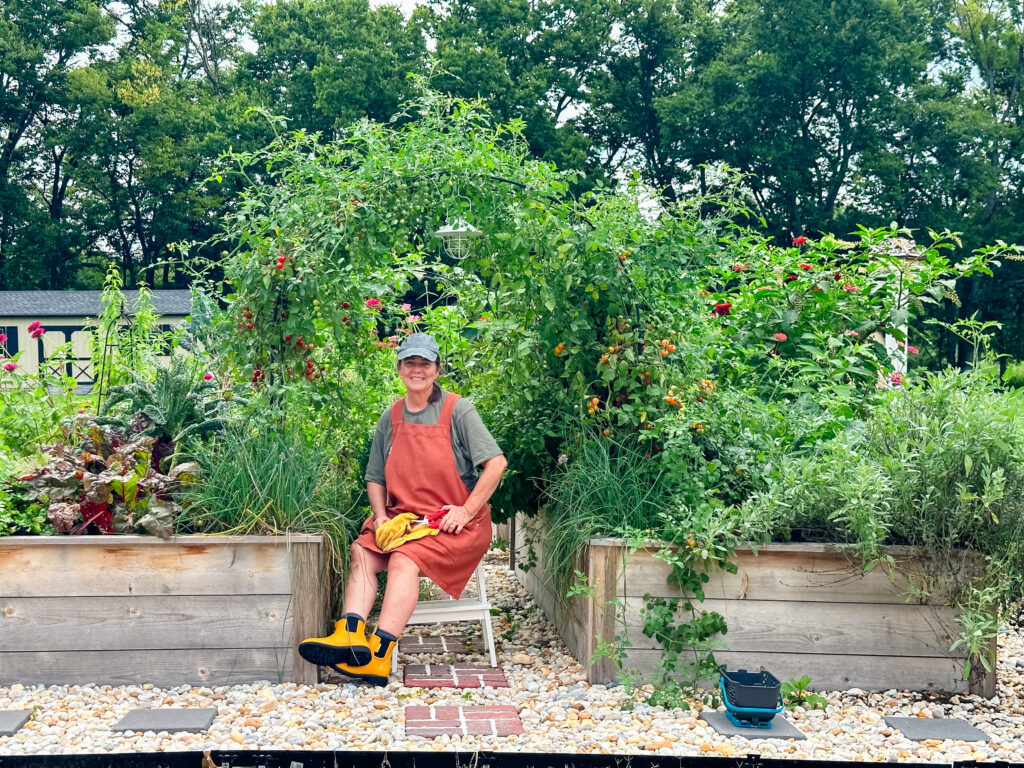
On a summer evening in the South, there’s a certain stillness that settles in just before dusk. The heat softens, the light turns golden, and somewhere in the yard—whether it’s a row of tomatoes, a bed of herbs, or a few faithful hydrangeas—you can almost feel the garden exhale.
It’s easy to think of a garden as something we manage. We plant it, tend it, harvest from it. But anyone who has kept a garden long enough knows the truth: a garden has its own rhythm. And if you pay attention, it will gently teach you how to live.
Long before modern planners and productivity systems, there was an ancient rhythm given to guide both land and life. In the pages of Leviticus 25, we find the practice of Shemitah—a seven-year cycle observed in ancient Israel. For six years, the land was cultivated. But in the seventh year, everything stopped.
The land rested.
No planting. No pruning. No striving for yield. Just a quiet trust that what had been provided would be enough.
It’s a concept that feels almost foreign today. In a culture that celebrates constant output, the idea of an entire season devoted to rest can seem impractical, even indulgent. And yet, if you’ve ever worked the soil, you know: land that is never allowed to rest eventually stops producing.
The same is true for us.
⸻
The First Years: Planting What Matters
Every garden begins with intention. Seeds are chosen carefully. Soil is prepared. There is a quiet hopefulness to it all—work that is unseen but essential.
The early years of a Shemitah cycle mirror this same beginning. They are years for planting—not just in the literal sense, but in the deeper rhythms of life.
It’s where we establish habits, build a home, begin meaningful work, and invest in relationships. Much of it feels small at first. But like any good gardener knows, what happens beneath the surface is what makes everything else possible.
⸻
The Middle Years: Tending and Pruning
By the third and fourth years, a garden begins to show itself. Green stretches outward. What was once fragile becomes established.
But growth, left unchecked, can quickly become unruly.
Tomato vines tangle. Herbs crowd one another. Even the healthiest plants need to be thinned and pruned so that what remains can truly flourish.
Life follows a similar pattern. These middle years are often marked by expansion—more responsibility, more opportunity, more movement. But they also call for discernment.
Not everything that can grow should.
There is a quiet wisdom in choosing what to keep—and what to gently cut back.
⸻
The Harvest Years: Receiving What Has Grown
Then comes the reward every gardener waits for.
Tomatoes ripen on the vine. Basil fills the air with its fragrance. The work of earlier seasons begins to bear fruit.
In the fifth and sixth years of this ancient rhythm, there is a natural invitation to receive—to gather what has grown and to enjoy it fully.
But even here, the pace is different than what we often expect. There is no frantic urgency, no pressure to immediately start over. Instead, there is a steadying awareness: this fruit came from somewhere. It was planted, tended, and patiently brought to maturity.
And it is enough.
⸻
The Seventh Year: Letting the Land Rest
Perhaps the most striking part of the Shemitah cycle is what happens next.
The land is left alone.
Not abandoned—but released. Whatever grows naturally can be gathered, but there is no striving to produce more.
It is a year that requires trust.
For those who lived this rhythm, it was a tangible reminder that provision did not ultimately come from their own effort. The land could rest because they believed they would still be sustained.
It’s a lesson that feels especially meaningful today.
We are accustomed to pushing through every season—adding, building, producing without pause. But just like a garden, a life that never rests eventually becomes depleted.
Rest is not a reward for finishing everything.
It is part of how things are meant to grow.
⸻
Living With the Rhythm
You don’t need acres of land to live this way.
You may find it in a small backyard garden, a front porch lined with potted herbs, or even in the quiet order of your home. The invitation is the same: to begin noticing the seasons you’re in.
Are you planting something new?
Tending what is already growing?
Enjoying a season of harvest?
Or being gently invited to rest?
There is a kind of peace that comes from aligning your life with these rhythms.
Because in a garden, nothing is wasted. The dormant seasons prepare the soil. The growing seasons strengthen the roots. The harvest seasons nourish. And the resting seasons restore what cannot be seen.
⸻
A Slower, Truer Way
In the end, the wisdom of Shemitah is not about agriculture alone. It’s about remembering that life was never meant to be lived at a constant pace.
There is a time to plant.
A time to tend.
A time to gather.
And a time to let go.
The garden knows this.
And if we’re willing, it will teach us.