

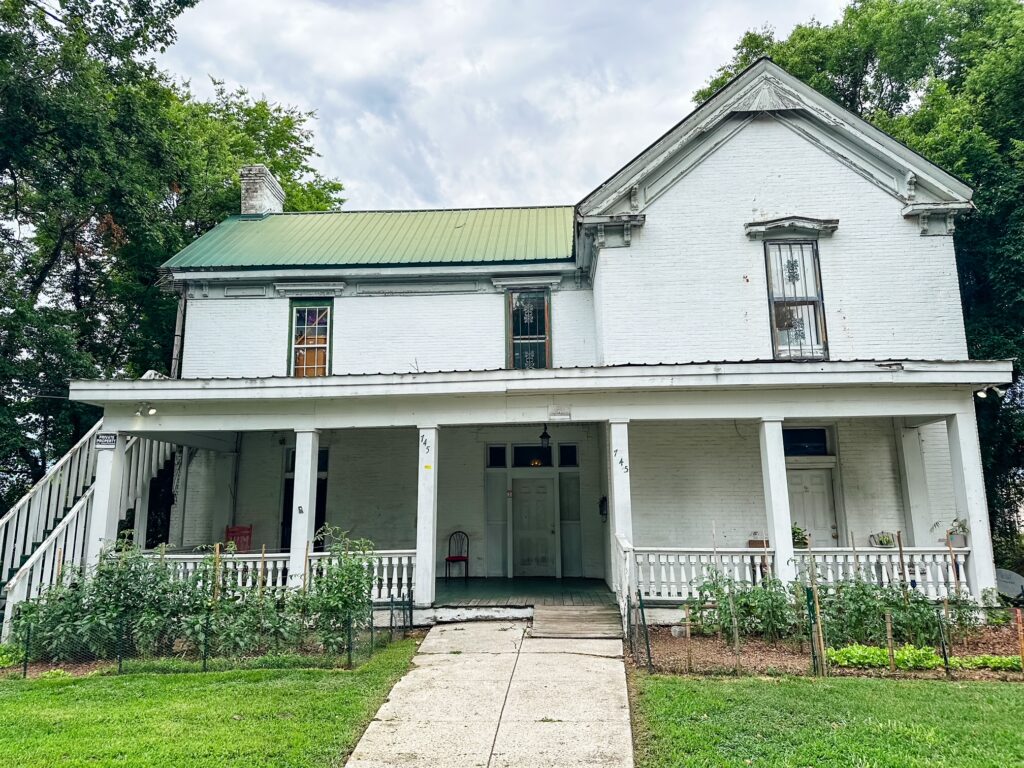
Ever curious about the creative ways people grow food wherever they find a patch of ground, I found myself doing a double-take as I drove through Clarksville this week. A large white house caught my attention—not because of the house itself, but because of the tiny, meticulously tended garden tucked into the front yard between the porch and the street.
I turned the car around.
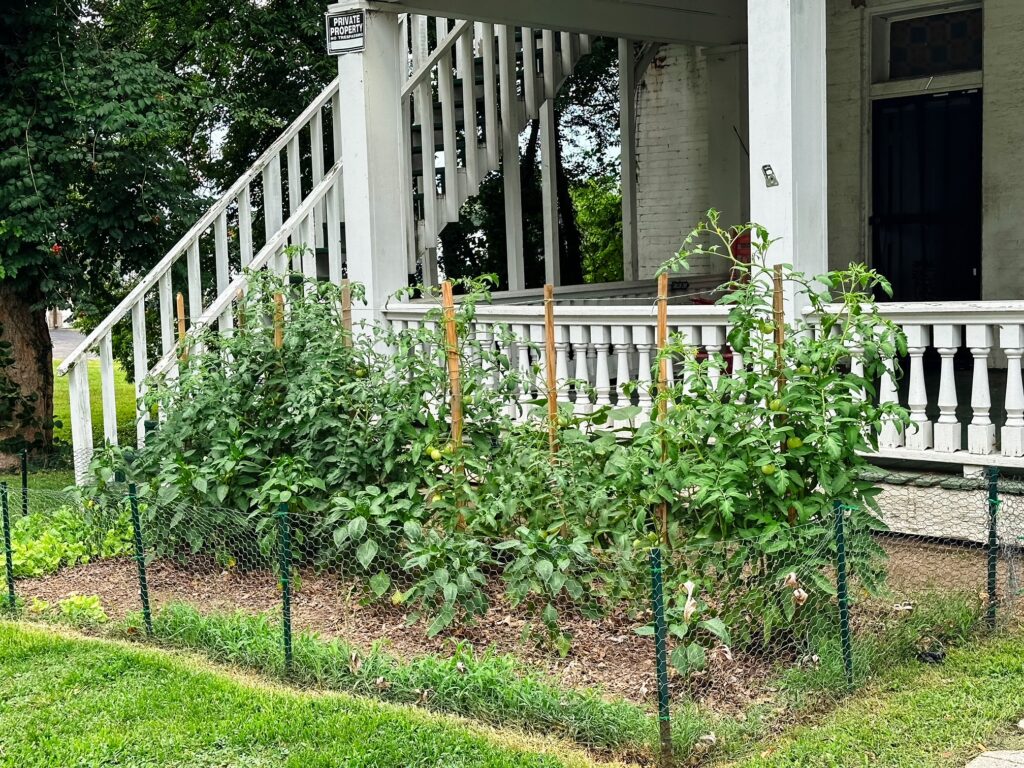
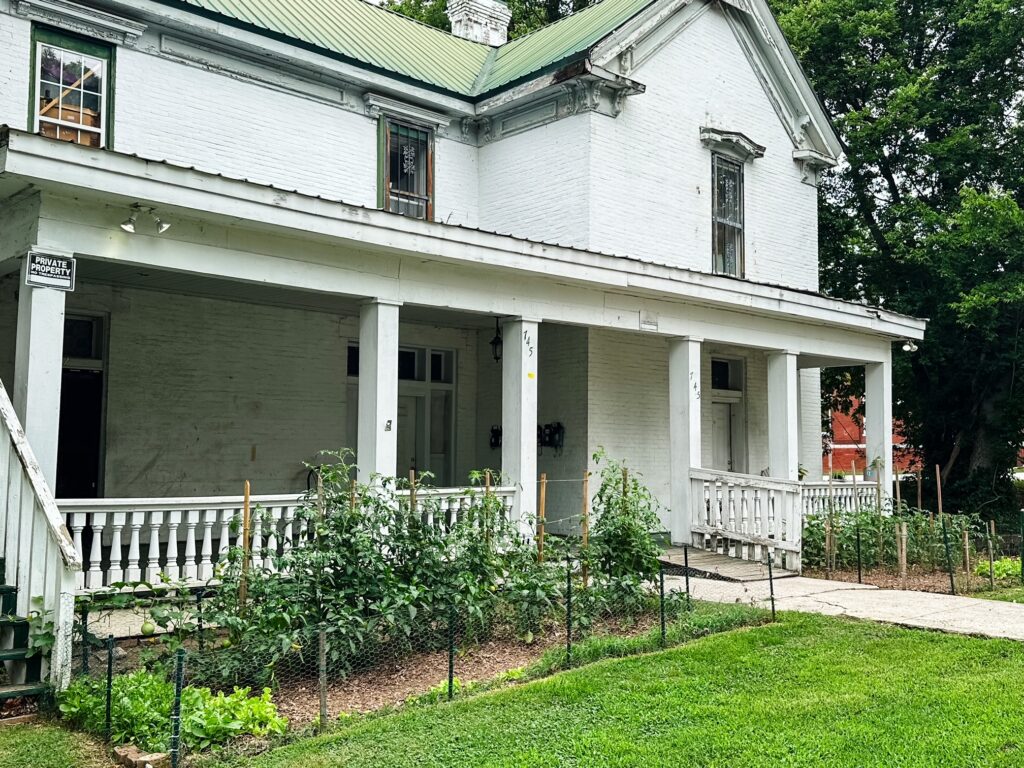
The front walk divided the garden into two nearly symmetrical halves. Wooden stakes held the tomato vines upright as if standing at attention, while bright green heads of lettuce formed neat little rows in front of them. A low rabbit fence surrounded the entire plot. Every plant seemed intentional. Every inch had been cared for.
There was no backyard to speak of, only this modest front-yard garden quietly announcing itself to everyone who passed. At first I assumed the family living there had simply made the most of the space they had. But as I walked closer, I noticed several numbered doors along the front of the house. It wasn’t a single-family home at all.
The building itself showed the wear of many years. Its paint was weathered. The porch had seen better days. Yet not a single weed could be found in that little garden. The contrast stopped me. There were no cars in the driveway and no one outside. Standing there alone on the sidewalk, I found myself wondering, What is the story here?
Later I mentioned the house to a friend who lives in Clarksville. She didn’t recognize it at first until I showed her the photograph.
“Oh,” she said. “That’s a shelter for people experiencing homelessness.”
I stared at her for a moment.
“But who planted the garden?” I asked.
“One of the residents,” she replied. “He takes care of it.”
That simple answer lingered with me long after the conversation ended.
My own journey into gardening began during the upheaval of the pandemic, when so much that once seemed certain suddenly wasn’t. Working in the soil became more than a way to grow food. It anchored me. Tending plants taught me to pay attention again—to the seasons, to the weather, to the astonishing life hidden beneath the surface of the earth.
I discovered that gardens nourish far more than our bodies. They cultivate patience. They restore hope. They remind us that life has a way of returning, quietly and faithfully, after seasons that appear barren. Perhaps that is why this little garden stayed with me.
I don’t know the man who planted it. I don’t know what losses he has endured, what disappointments he carries, or what tomorrow holds for him. Those are his stories to tell. But I do know what I saw.
I saw a small piece of ground brought into order.
I saw beauty created where it wasn’t required.
I saw someone choosing to cultivate life.
In a world that often feels untended, that little garden bore witness to something larger than tomatoes and lettuce. It quietly proclaimed that stewardship is still possible, that dignity can take root in unlikely places, and that hope sometimes begins with nothing more than a handful of seeds and the willingness to care for them.
Every place has a story worth preserving. Sometimes the story isn’t the building at all. Sometimes it’s the little garden growing faithfully in front of it.
And perhaps, if we have eyes to see, every well-tended garden offers a glimpse of the Creator Himself—the Giver of Life, who patiently cultivates hope in places the rest of the world has forgotten.

Absolutely brilliant story and sentiments Mrs Kim!
Jodeci & I are loving our gardening journey.
I hope to add a green house in the back in time.
Aaron, Thank you. I am also enjoying your gardening journey. Jodeci releasing the snake in the river made me laugh. She’s a brave girl. A greenhouse is also in my garden plans in the future. All in good time.