

LAND · ESSAY
By Kim Swift
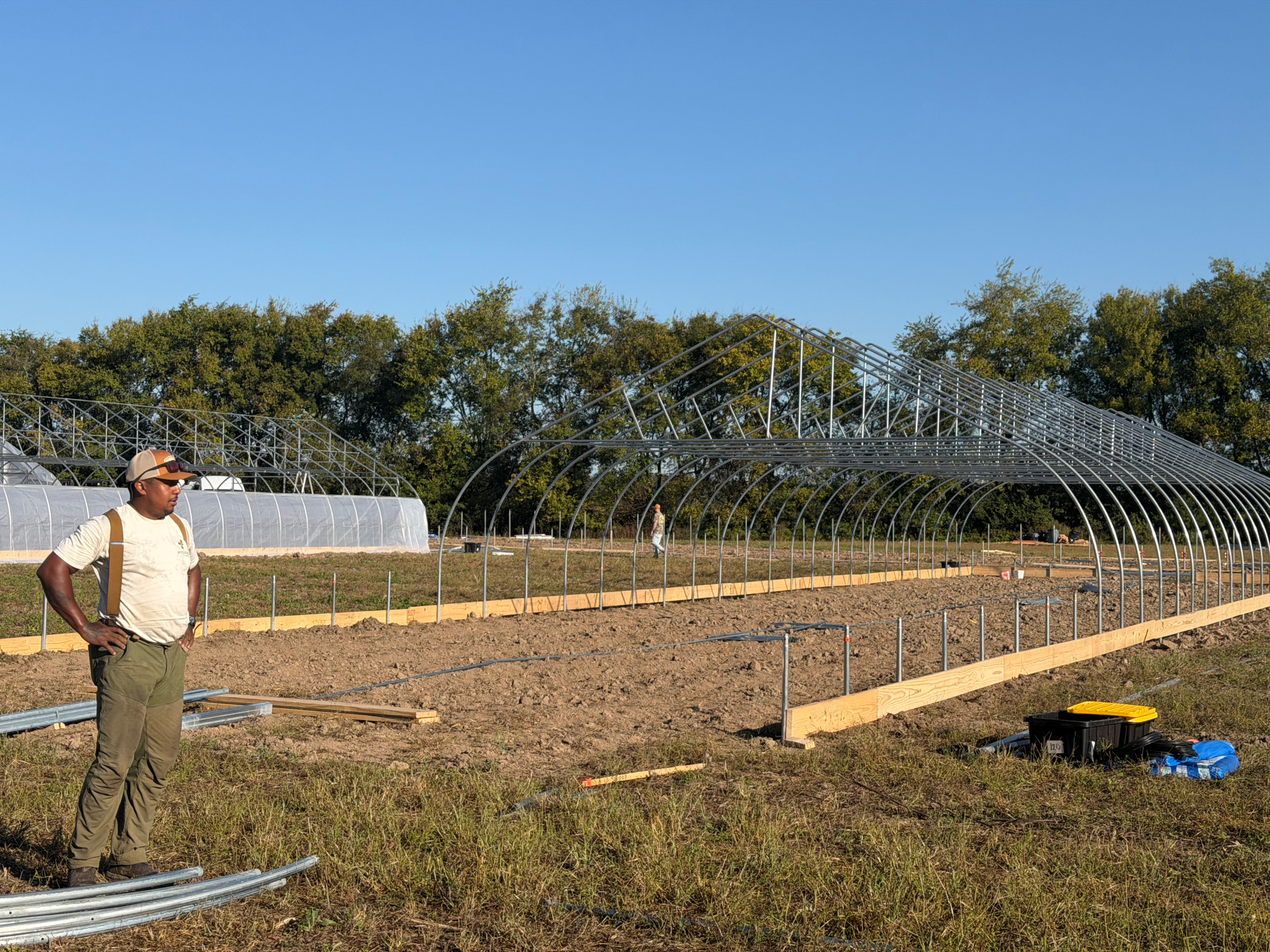
The cold metal pieces lay on the dew-wet ground beside the hoop house they would become. There were buckets of bolts and nuts, tools supplied for the work, and people who knew what needed doing. I had come with willing hands and a question I hoped would soon be answered: Would they be useful?
At sixty-seven, I was less certain of my strength than I was of my desire to help. I had never built a high tunnel hoop house. I did not know how the work would be divided or what would be expected of me. My greatest concern was that I would become the weak link in a team that had plenty to accomplish.
Nevertheless, I had answered the call. On Wednesday, October 7, 2026, at eight in the morning, I walked across a harvested field in my boots and jeans to take my place in the work.
For more than a year, I had followed Armistead Farm from a distance. The Short family has farmed this land in Franklin, Tennessee, since 1887. Now a new chapter is taking shape: Armistead, a planned neighborhood centered on a working farm—an agrihood. Within that larger community, the nonprofit Armistead Farm is being established to grow food and offer opportunities for people to learn from the land. When I first learned of the plans, I signed up for the newsletter and watched them unfold on the website and social media.
Then came a long quiet interval. Eventually, an invitation arrived: a Community Hoop Build. Eight high tunnels. A week of work. They needed volunteers.
Here was a way to offer more than my interest and goodwill.
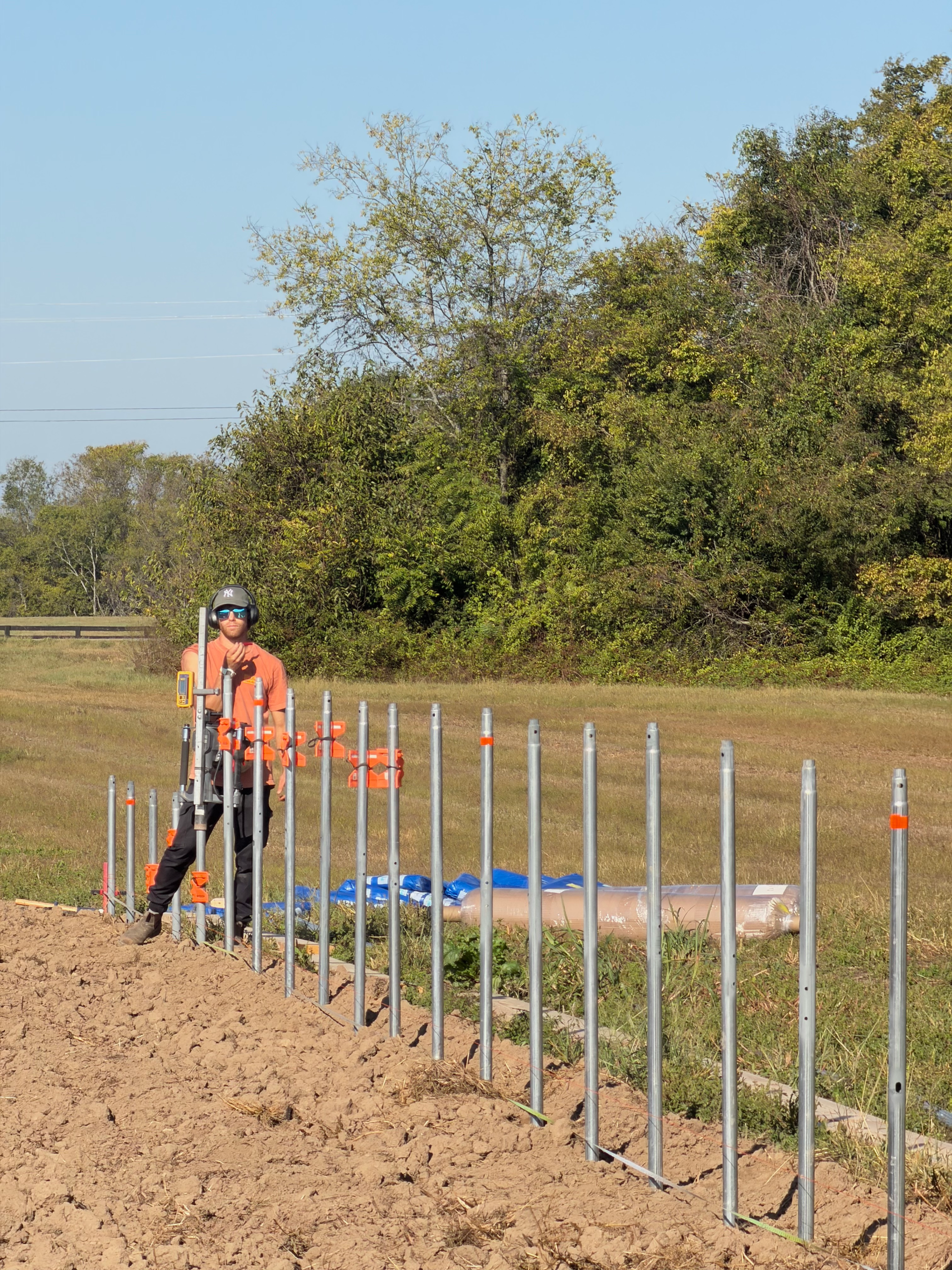
Before volunteering, I drove past the site. Across the road stood Westhaven, an established neighborhood. On the Armistead side, the open field gave little indication yet of the homes and community life being planned around the farm.
I did not know the Short family. What drew me was their effort to make room for a new community while keeping farming at the center of the place. I wanted that effort to succeed. I hoped other families might someday find something useful in its example, a way forward for land they loved and wanted to keep fruitful and faithful to its heritage.
The invitation gave that hope a task. The high tunnels—large frames covered in plastic, also called hoop houses—would shelter crops and extend the growing season. Vegetables intended for tables in Franklin would grow beneath them. Before there could be growing, there was building to do.
After introductions, waiver forms, and a brief welcome from Bill Short, I joined a small team assembling the heavy hoop frames that would arch overhead. The pieces were already laid out. We lifted the metal onto wooden planks, fitted the sections together, and shook them, hard, when the holes refused to line up. Then came the bolts, the nuts, the tightening. We lifted, moved, and stacked the completed frames for the Nifty Hoops crew to raise into place.
There was a sequence to learn. One piece needed another. A connection had to fit before it could be secured. The work asked for attention, strength, and cooperation, and there was ample opportunity to give all three.
For a couple of hours, we continued. By the time we stopped for water, our team had finished the framing pieces for the hoop house we were working beside.
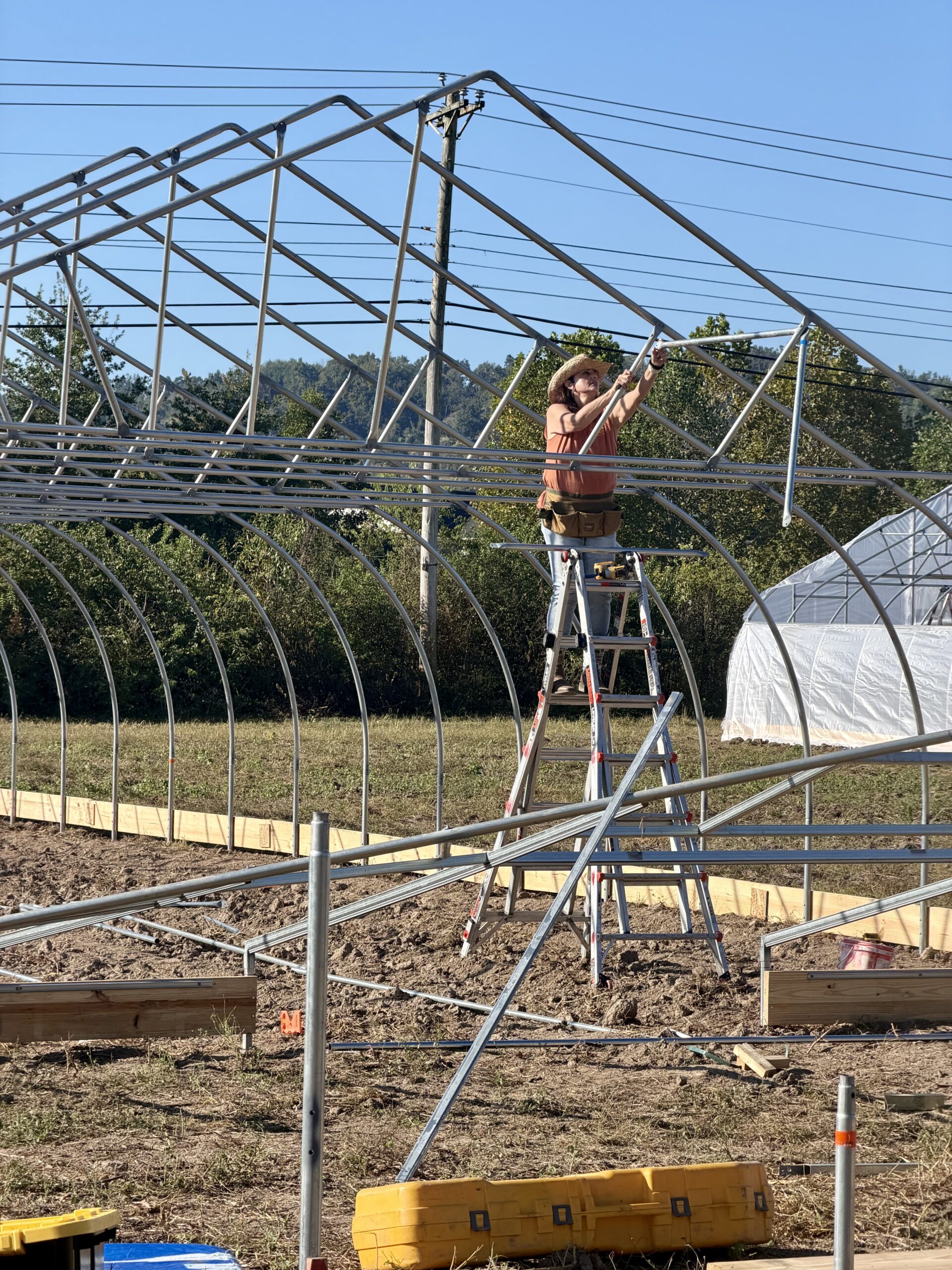
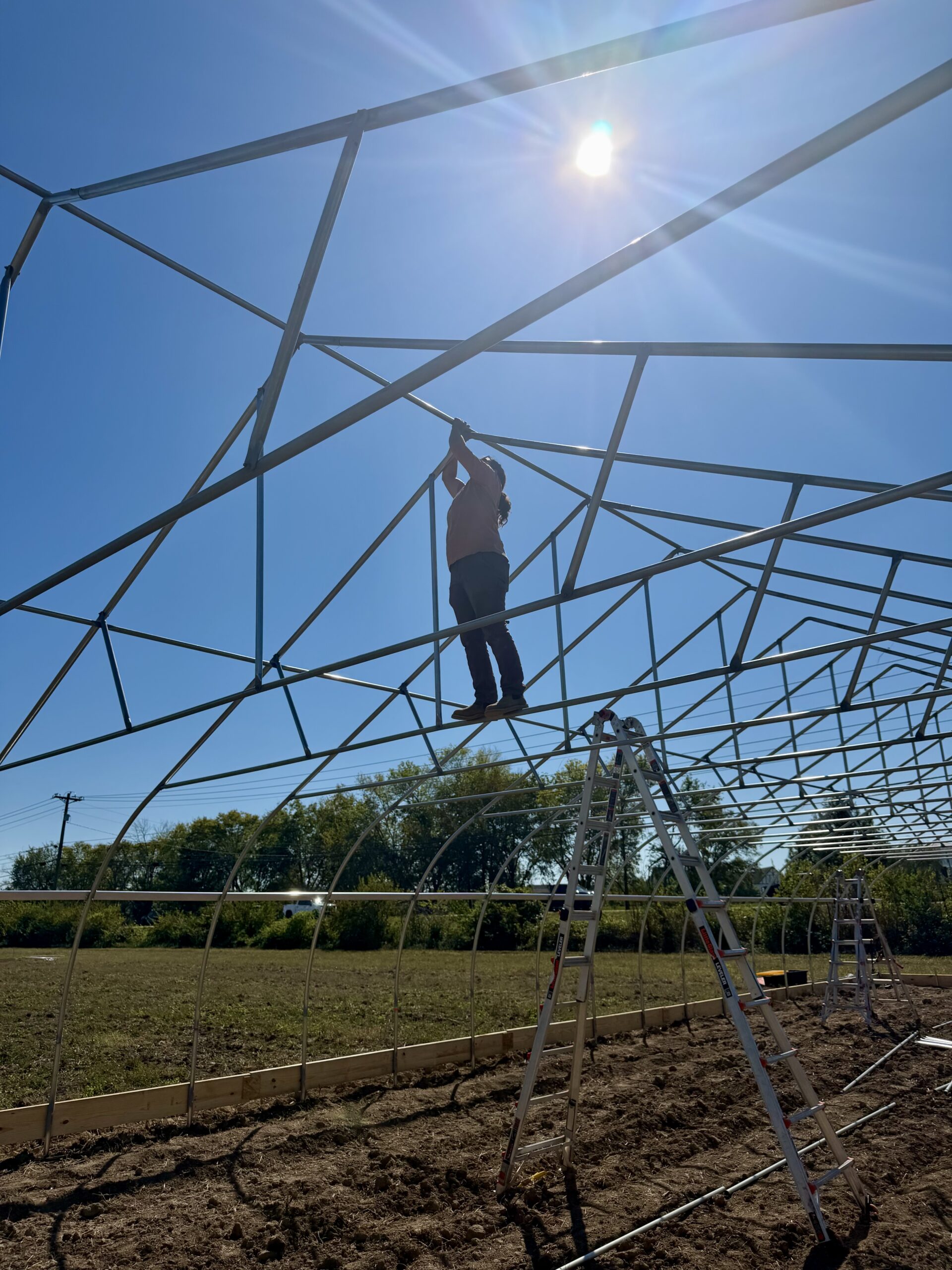
My next assignment was with Lee Boone, a member of the Short family, and her daughter, Annie. Lee was close to my own age, and both were a joy to work with. We assembled the smaller braces for another hoop house, fastening the pieces together and carrying them to the designated stack.
We talked some. Mostly, we worked. The repeated movements became familiar: fit, fasten, lift, carry. As the morning warmed, sweat streamed down our faces. Somehow, Lee still looked as fresh as she had when we began. We laughed about it, and I teased that she ought to do a lipstick commercial: after all that work, her lipstick still looked as good as ever.
Somewhere in that repetition, I noticed that neither the farm manager nor the assistant farm manager was supervising us anymore. We were continuing on our own. I could not know what they were thinking, but I received their absence as a quiet reassurance: we had this.
I had arrived afraid of hindering the work. Now the three of us were moving it along. When we finished, I felt an exhilaration that sent me looking for a supervisor and another task.
This time, I joined two people inside a framed hoop house. We worked along the structure, securing connections with bolts and nuts. Where the holes were slightly misaligned, I used a battery-powered drill to open a passage through both sides of the metal so the bolt could slide through.
I enjoyed the work immensely. With three of us moving along the same line, however, we sometimes waited on one another. I began to see how one person could carry the tools and fasteners together and move steadily from connection to connection.
On Friday, October 9, I returned for another morning shift. I gathered what I needed and went to the farthest hoop house.
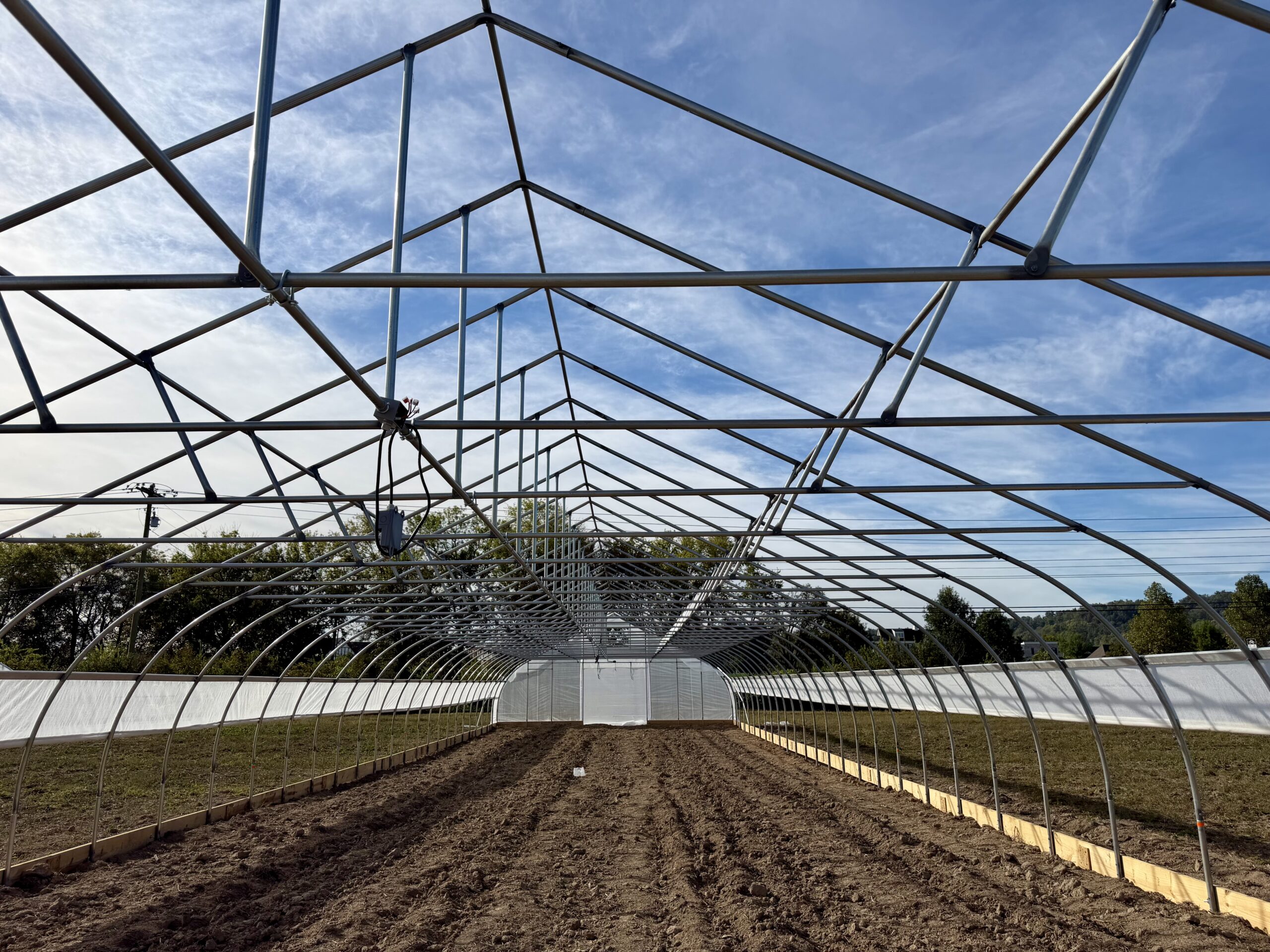
There, inside the massive frame, I worked alone. I had a method now, and a pace that was steady and comfortable. When a bolt would not pass through, I drilled. When it did, I secured it and moved on.
There was pleasure in being able to do this: to understand what was needed, to have the tools for it, and to carry it through. I was discovering a competence I had doubted before the work began.
I completed the remaining fastening work in two hoop houses before being called to help with a covering. Then I joined the others again.
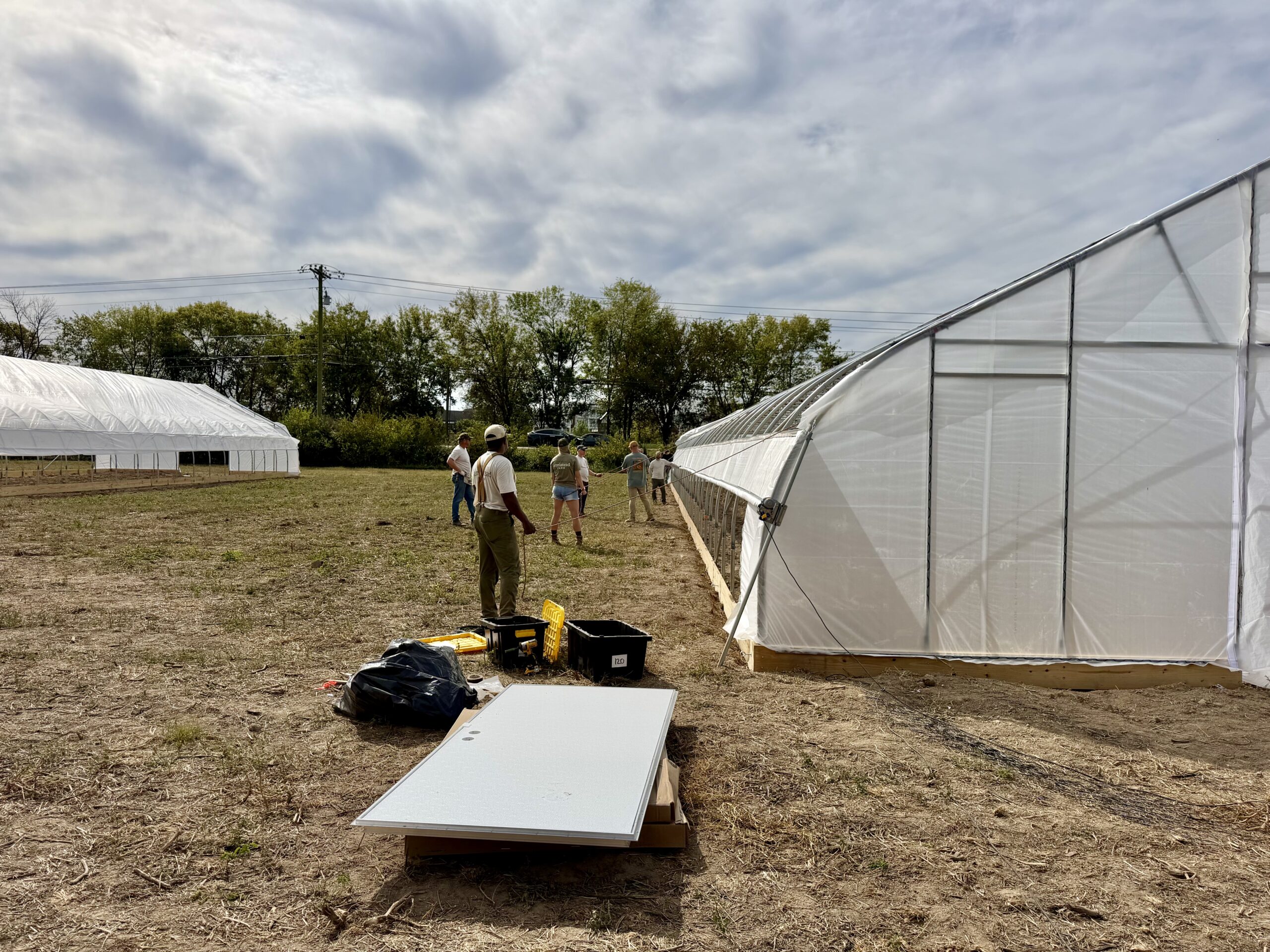
On one side, the heavy plastic was hoisted with ropes and pulleys. On the opposite side, we held it in place while a worker secured it along the panels. The wind was relatively gentle, but even that was enough to threaten our grip. We had to keep hold while the covering was fixed to the frame.
It took considerable time, but eventually the covering was secured. The size of it had seemed daunting. Holding it with the others, I could feel how much depended on each of us keeping our grip.
And then, before I knew it, my shift was over.
I was hot and weary at the end of both mornings. Alongside that tiredness was a joyful satisfaction in the physical work itself, and in having been able to do it. My attachment to the farm, the project, and the family had grown firmer through those hours.
My share was small. The build had begun on Monday, October 5. Other volunteers gave other hours. The professional crew brought the skill to raise the frames we assembled, and many hands were needed to cover them. The farm managers and members of the Short family worked alongside us. I had helped with only a portion of that work.
Yet a portion is something a person can give. It has a beginning and an end, a weight to lift, a connection to secure. It can be offered with the strength available that day.
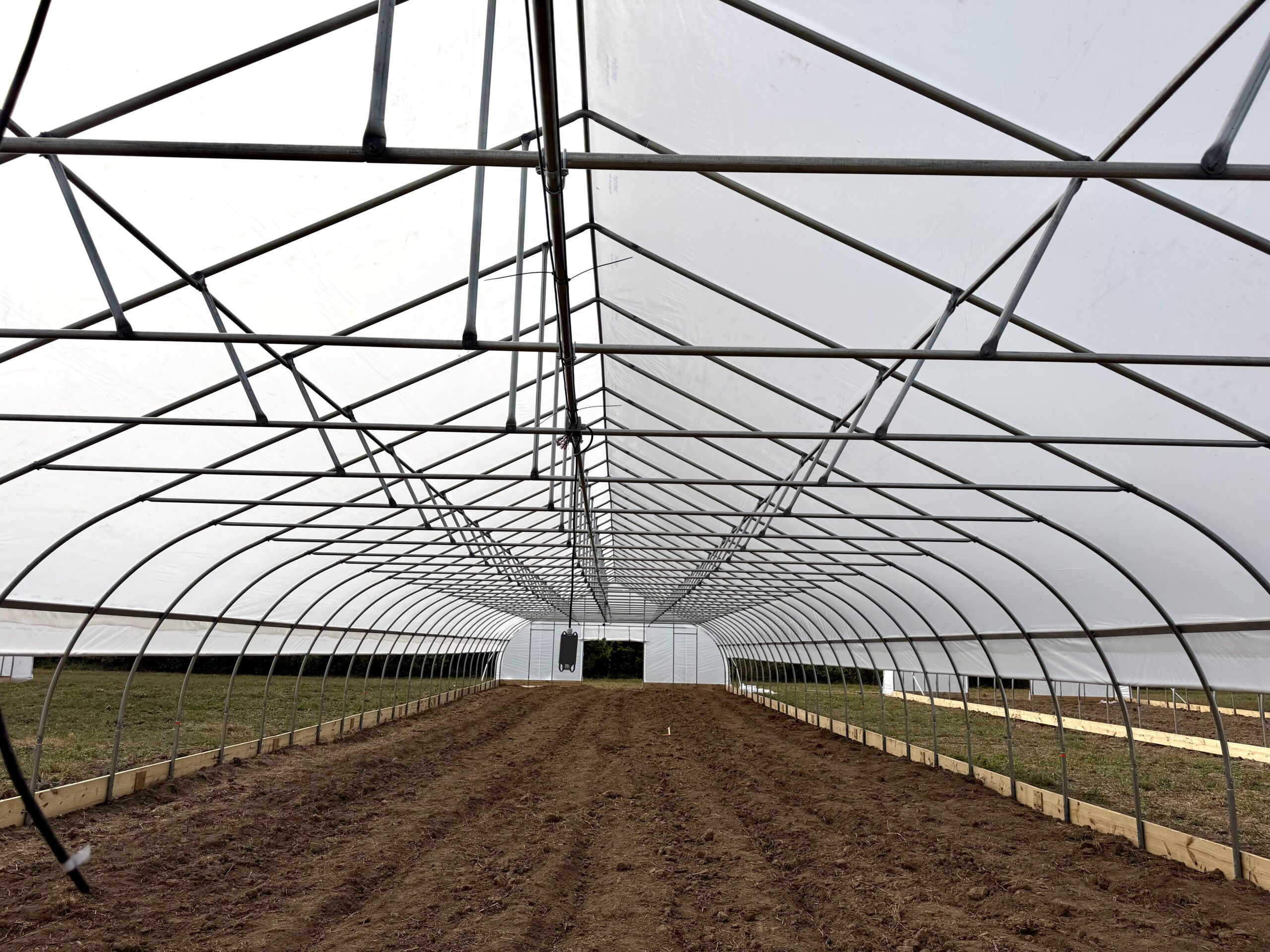
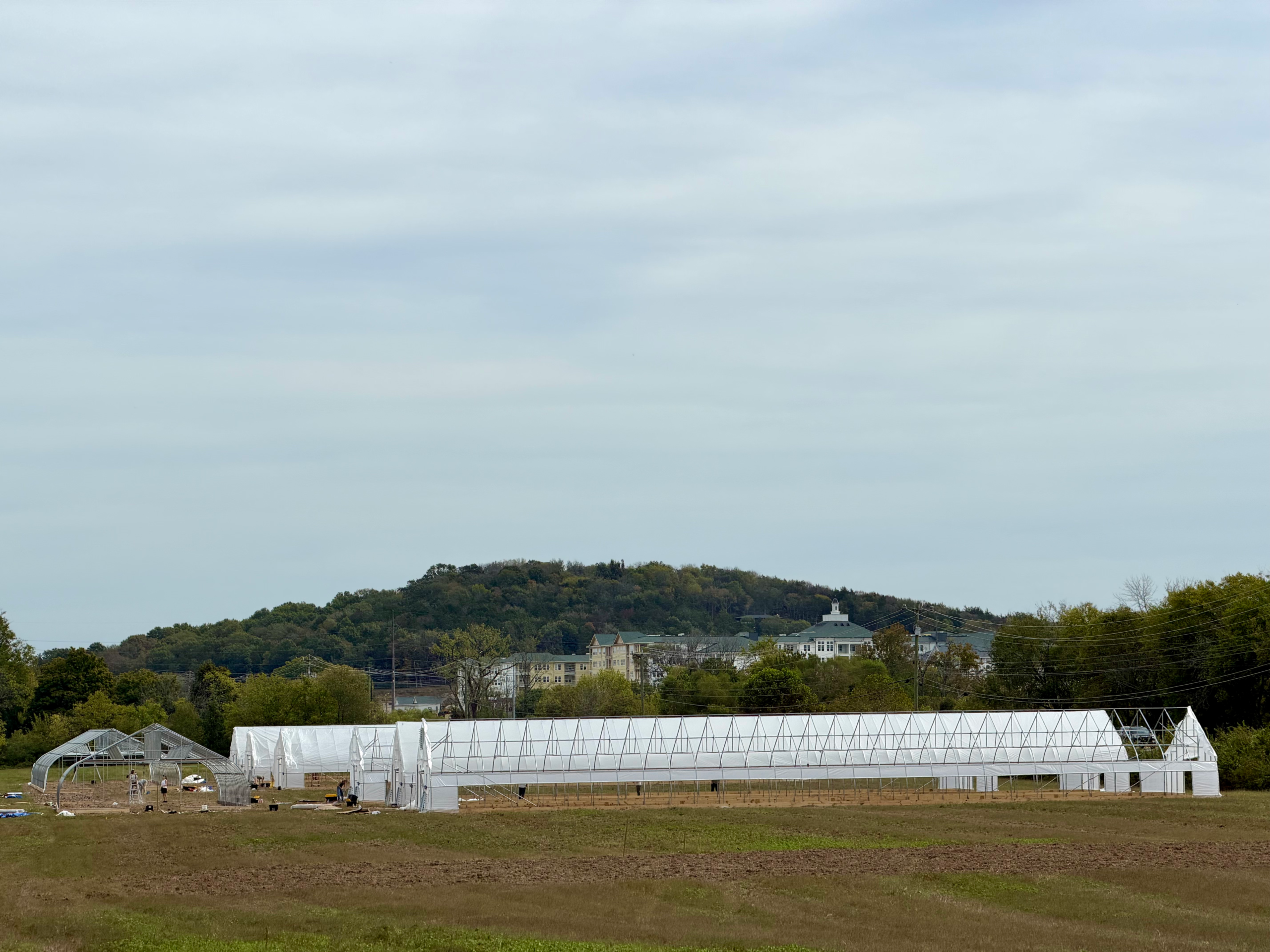
I hope Armistead flourishes. I hope the vegetables grown beneath those coverings find their way to tables in Franklin, and that the people who make their homes around the farm come to know it through the seasons. Perhaps other families will find encouragement here for the future of their own land. Those possibilities are still ahead.
What I know already is what those two mornings gave me: the joy of useful effort, the fellowship of working beside people I had just met, and the satisfaction of carrying a task through on my own.
For as long as those hoop houses stand, they will hold a personal meaning for me. I will know that some of their pieces passed through my hands, that I helped fasten some of their connections, that I, along with others, held a covering while it was secured against the wind.
I understand those hours as an offering of service, ultimately to God, and through that service to the people this farm hopes to nourish.
The work left me tired and a bit sore. It also left me with a share in what comes next.